FUNDACIÓN THYSSEN-BORNEMISZA
Warhol, Pollock y otros espacios americanos
Warhol, Pollock y otros espacios americanos
Couldn't load pickup availability
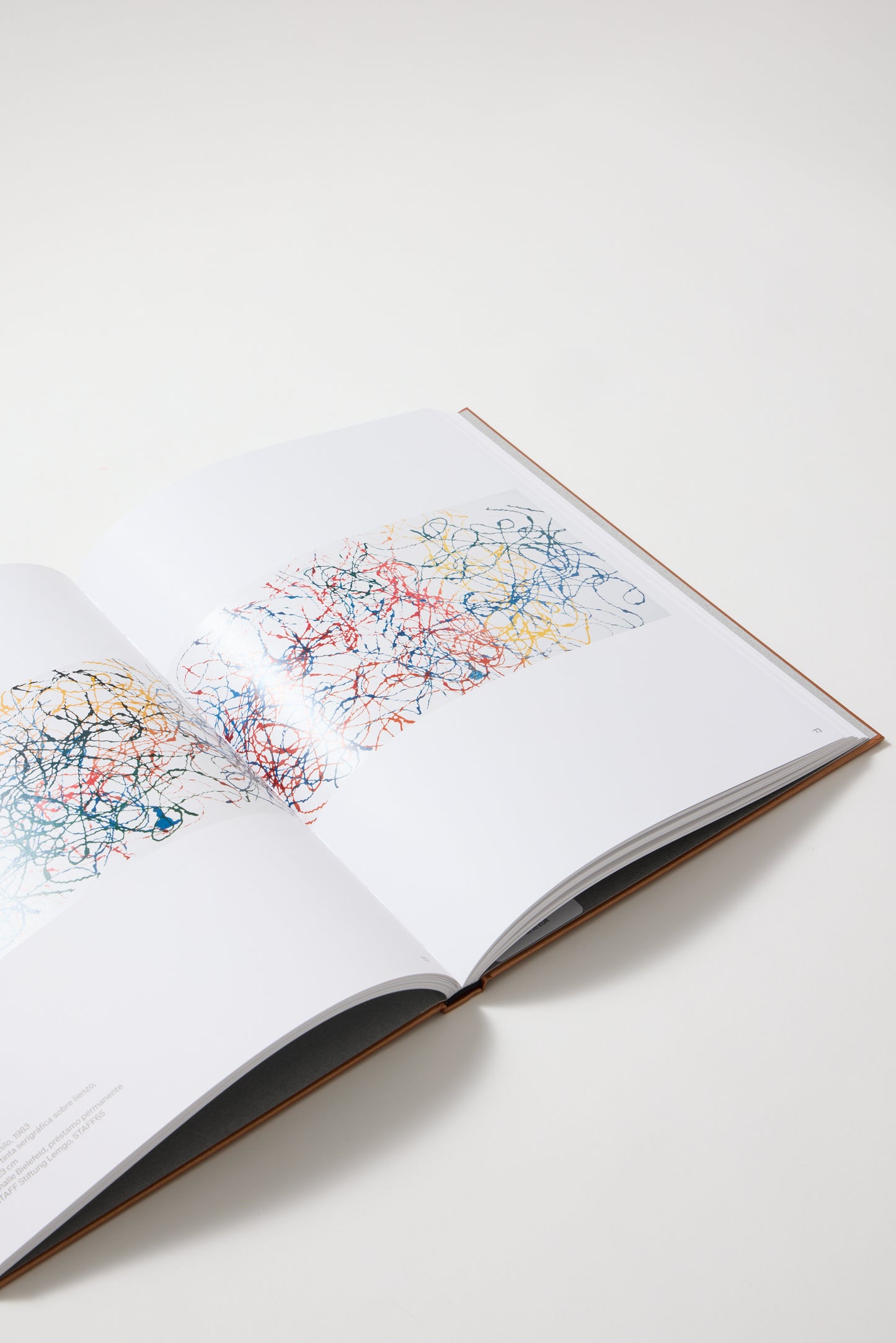
Traditionally, Jackson Pollock's abstract expressionism and Andy Warhol's pop art are presented as polar opposites: abstraction versus figuration, original genius versus appropriationist of consumer culture. However, this book questions that dichotomy, revealing deep affinities between the two. Pollock, a pictorial celebrity who died in 1956 in a modern accident like James Dean, fascinated Warhol, who openly admired him.
Both artists moved between abstraction and figuration, subverting the traditional Renaissance perspective. Pollock's abstractions retain figurative traces, while Warhol's figurations—such as his Elvis floating above ambiguous backgrounds—break the illusionist space, speaking not only of consumable objects, but of visuality itself. The book highlights how these “returns” to the figurative transform without repeating the past.
With essays by Estrella de Diego (curator), Patrick Moore (former director of the Warhol Museum), and a conversation between de Diego, Guillermo Kuitca, and Guillermo Solana (director of the Thyssen-Bornemisza), this work invites us to reread the history of American art, breaking down rigid categories. Supported by the Pollock-Krasner Foundation, Pollock and Warhol engage in dialogue for the first time, guiding us through a shared visual thread.
Share